Archives for November 2017

The Necessity to Succeed

tip-o-the-morning

Tom Corley boats - crop

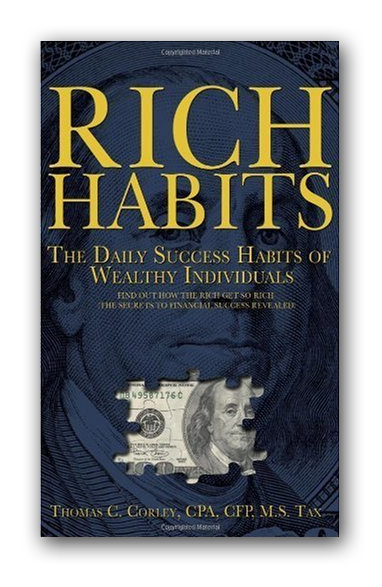
There were three groups of self-made millionaires in my Rich Habits Study:

  1. Those who saved their way to wealth
  2. Those who worked for large public companies
  3. Entrepreneurs

The third group was an interesting group. These individuals put everything on the line, in the pursuit of their dream. They invested everything they had. They borrowed money against their home. They borrowed money from family. They borrowed money from relatives. They borrowed money from friends. They personally guaranteed loans from the bank.

If they failed, their failure would not only affect their spouse and children but it would negatively impact many other people and destroy their reputation among family, friends and the bankers who went out on a limb to help them fund their dream.

Being an entrepreneur is a very courageous act.

When you pursue any dream, you will have to confront and overcome many obstacles, pitfalls, mistakes and bad decisions. Every mistake and bad decision comes at a severe financial cost. Make too many mistakes and bad decisions and you will run out of money, ending your dream.

For this group, failure was not an option and success was a necessity. They had no choice but to succeed.

This necessity to succeed forced these self-made entrepreneurs to grow and become better in many ways:

  • They identified and cookie cut proven processes that prevented them from repeating mistakes.
  • They adopted daily habits to help them achieve their goals which kept them moving forward toward the achievement of their goals.
  • They forged relationships with influential individuals who helped mentor them and open doors.
  • They became knowledge sponges, learning everything they could about their industry. They read to learn every day.
  • They practiced specific skills for many hours every day until they gained mastery.
  • They experimented to find new, novel ways of doing things.
  • They became mentally tough as a result of meeting and overcoming numerous obstacles, mistakes and bad decisions.
  • They gained control over their emotions, which put their executive brain (neocortex) in charge and not their emotional brain (Limbic System).
  • They learned to focus like a laser in order to complete important tasks that led to the achievement of their goals.
  • They isolated themselves from others for hours at a time to think through problems in an effort to find solutions to those problems.
  • They evolved a positive mental attitude and tremendous confidence by facing and overcoming obstacles, mistakes and bad decisions.
  • They worked very hard for their dream, which created a powerful work ethic.
  • They acquired tremendous willpower through their daily grind; willpower they never realized they had.

Those who pursue a dream, put everything on the line. This gives them very little wiggle room. Their backs are against the wall for most of their journey. They put themselves in a position in which they have no choice but to succeed.

When failure is not an option and success is a necessity, you will find within yourself resources, success traits and the grit you never knew you had. You grow into the person you need to be in order for success to visit you.


Open Your Pandora’s Box

tip-o-the-morning

Tom Corley boats - crop

One of the most important characteristics of the self-made millionaires in my Rich Habits Study was a fanatical obsession with something.

Ninety-two percent of the self-mades in my study were obsessed with the pursuit of some long-term goal or dream. Stated simply, self-mades are obsessed.

Their obsession endowed them with certain success traits they did not have before their obsession took hold of them:

  • Good Habits
  • Relentless Persistence
  • An Open Mind
  • Patience
  • Laser-Like Focus
  • Work Ethic
  • Desire to Learn
  • Curiosity
  • Courage (Greater Risk Tolerance)
  • Enthusiasm
  • Positive Mental Outlook
  • Motivation
  • Increased Will Power
  • Resilience
  • Emotional Energy
  • Attention to Detail

What triggers obsession?

Obsession is triggered by passion. Passion is sparked by engaging in some activity that lights up the emotional center of your brain (Limbic System).

Finding something you are passionate about causes the first domino to fall, setting in motion all of the traits you will need in order to become successful.

This is why experimentation is so important, especially at a young age. When you experiment with different activities, you increase the chance of finding one activity which makes your heart sing with passion.

That passion for doing something you love, eventually turns into obsession. Once you become obsessed, life automatically endows you with all of the success traits you will need in order to become successful.

So, find your passion. When you do, everything you need to succeed will be handed to you.

Passion is the key that unlocks the Pandora’s box of success traits that reside in every human being.

Rich Habits Poor Habits Episode 47 | Being rich is really about two things Part 1

In Rich Habits Study, Tom Corley interviewed 233 wealthy individuals (177 of whom were self- made millionaires) with at least $160,000 in annual gross income and $3.2 million in net assets.

He found that becoming and staying rich tends to come from two actions:

1. Accumulating wealth  australian coins

2. Keeping the wealth you’ve accumulated

The first step, getting rich, requires that you forge certain specific habits that make getting rich possible.

In his book “Change Your Habits Change Your Life,” he shares some of the stories about how these self-made millionaires accumulated their wealth, but some of the most important Rich Habits for accumulating wealth.

This includes:

Pursuing daily growth

Daily self-improvement is a hallmark of self-made millionaires.  

ad_rhph

They read at least 30 minutes a day to gain knowledge.

They also devote significant time every day to practicing and perfecting their skills.

Dream-setting.

The rich build goals around each of their dreams.

This makes it possible to realize those dreams.

Think of every dream as a rung on your own ladder.

Your ideal, perfect life is realized when you reach the top of the ladder.

Eighty percent of the self-made millionaires in my study built goals around their dreams.

Saving.

Ninety-four percent of the rich saved 20% or more of their income for many years prior to becoming rich.

They then put their savings to use by taking calculated risks.

Taking calculated risks.

Fifty-one percent of the self-made millionaires in my study took a calculated risk in time and money.

Calculated risk is a unique type of risk that requires you to do your homework.

Being optimistic.

Seventy-one percent of the self-made millionaires in my study were optimistic about life.

Their optimism infected everyone around them.

They became magnets for other success-minded people. business data success

Being open-minded. 

Being open to new ideas, new ways of doing things and the opinions of others is critical to learning and growth.

Growth is the parent of success.

You must grow into the person you need to be in order for success to visit you.

Finishing what you start.

The rich don’t quit.

They stick to something until they succeed, go bankrupt, or die.

Eighty-percent were focused on achieving some goal and 55% spent one year or more on one singular goal.

But accumulating wealth is only one part of the equation.

In my book “Rich Habits Poor Habits,” I share another equally important part of being rich: holding on to the wealth you’ve accumulated.

You may also be interested in reading:

RICH HABITS POOR HABIT EPISODE 46 | 4 HABITS THAT WILL KEEP YOU FROM GETTING RICH

RICH HABITS POOR HABIT EPISODE 45 | WILL YOUR CHILD BE RICH OR POOR? 15 POVERTY HABITS PARENTS TEACH THEIR CHILDREN

RICH HABITS POOR HABIT EPISODE 44 | BEING SELFISH GETS A BAD RAP

RICH HABITS POOR HABIT EPISODE 43 | NEVER CLIMB A “MOUNTAIN” WITHOUT A GUIDE

RHPH-ad-horizontal


Your Control List

tip-o-the-morning

Tom Corley boats - crop

Worry leads to stress. Constant worry leads to chronic stress. Chronic stress transforms cholesterol into cortisol, impairing the immune system and inviting disease and illness.

Much of what we worry about, we have little to no control over. Once you accept the fact that you can only control what you can control, it’s as if a great weight were lifted off your shoulders. It’s an ah ha moment, that sets you free, fostering a more relaxed attitude and a clearer mind, which reduces the debilitating health effects of chronic stress.

So how do you do it? How do you stop worrying?

I want you to make two lists:

  1. Things You Can Control
  2. Things Outside Your Control

Let me give you an example by sharing my lists.

Things You Can Control

  • Morning Time – I wake at 5am, which gives me about theee hours of morning time to engage in my Rich Habits: Self-Education, Reading, Writing, Daily Exercise.
  • What I Read – I only read material that is uplifting or educational. I peruse the news and only read positive stories, ignoring all negative stories.
  • Who I Associate With – I minimize my exposure to toxic people and seek to spend more time with positive, upbeat people.
  • What I Eat – I engage in intermittent fasting, which means I eat nothing from 7pm – 12pm. When I eat, I eat mostly healthy foods.
  • What I Drink – I drink mostly flavored water and moderate my consumption of alcohol.
  • What I Think – I express gratitude every morning for three things that happened the day before. I cancel negative thoughts, such as “what if” negative scenarios and replace them with “what if” positive scenarios. We all have “what if” scenarios running through our brains. As much as 70% of those thoughts are negative. We can control that.
  • How I Respond to Others – We have a triune brain, or three distinct brains: Neocortex, Limbic System and Brain Stem. When we control how we respond to others, we are using our neocortex. When we allow our reflexive emotions to control how respond to others, we are using our Limbic System and Brain Stem. You have control over your brain, which means you have control over how you respond to others. I choose to use my neocortex. This means I avoid emotional responses, which could damage my relationships.
  • Business – I have three businesses: CPA Firm, Financial Planning Firm and the Author Business. To some extent, my activities can improve all three businesses. I engage in only those activities that improve my businesses. For example, writing and pitching the media on my writing is something I can control which boosts book sales. Every day, I engage in only those activities that boost book sales.
  • Health – I used to worry about getting sick, or getting some disease. I no longer do. What I can control is trying to be as healthy as I possibly can. To that end, I exercise every day, eat healthy and moderate my consumption of junk food and alcohol.

Things Outside My Control

  • Business – To some extent, I have little control over certain aspects of my business: Client Tax Audits, New Clients, Lost Clients, Media Exposure for my Author Business. For example, since I began my Author Business in 2009, Media Exposure has been a source of constant worry for me. In most cases, Media Exposure is outside my control. It’s not something I have any control over, so I chose to stop worrying about it. I continue to pitch my articles to the media every day and have set my expectations to zero. I no longer worry about Media Exposure because I expect zero Media Exposure. If I do get Media Exposure, I’m surprised and temporarily happy because reality exceeded my expectations.
  • How People React to Me – I no longer worry about how others react to me. I do not let their reactions to me, affect my responses to them. If they do not like my response, it’s their problem, not mine.
  • Heath – To some extent, I recognize my health is outside my control. Now, when I get sick, I accept the fact I’m sick and do what I can to heal myself.
  • Macro Events – I spend little to no time worrying about politicians, the economy, or national and world events. Those things are completely outside my control.
  • Life – Sometimes life hands you a crap sandwich. A car accident, a lost client, publisher decisions, a bad month in books sales or financial planning revenues, commuter traffic, the weather, etc. I choose to no longer worry about life events for which I have no control over.

When you peel the onion of what you can and can’t control, it is a liberating experience. It clears your mind of everyday worries, reducing stress and improving your health.

When your mind is clear of worry, you are better able to pursue your dreams and your goals, overcome obstacles, find solutions to problems and think creatively. A clear mind keeps you moving forward in life. A mind cluttered with worry, keeps you stuck.

A Life Worth Living

tip-o-the-morning

Tom Corley boats - crop

Most people have a job. And that job is a means to an end. It provides us with a place to live, food and the ability to pay our bills.

Yet, we yearn for more. That more is a life, not simply of survival, but one worth living.

But how to we create a life worth living?

In order to answer that question, you must ask yourself three questions:

  1. What should I keep doing?
  2. What should I stop doing?
  3. What should I start doing?

Since most need their job, these questions relate to the available time almost everyone has before or after work.

What Should I Keep Doing?

What things do you do with your available time that are helping you to grow and improve? These growth-related activities help move you forward in life. Growth-related activities are any activities that maintain or grow your knowledge, your skills and your non-toxic relationships.

What Should I Stop Doing?

What things do you do with your available time that do not help you grow? These activities are holding you back in life, making you feel like a mouse on a wheel. TV, Facebook, Twitter, YouTube videos, SnapChat, Instagram, Internet surfing, bar time, gambling, talking on the phone for hours, associating with toxic individuals – all of these things are time wasters. They don’t move you forward. They keep you stuck.

What Should I Start Doing? 

Depending on the study, between 75% – 80% of the wealthy are self-made. Meaning they came from poverty or the middle-class. Like most in poverty or the middle-class, they relied on a job in order to survive. But unlike most, they were able to rise above their circumstances and become wealthy. How?

The answers to this question are what sets self-made millionaires apart from everyone else.

Reading to learn, networking with success-minded people, volunteering, studying to get a degree or some license, building a side business, pursuing lofty goals or some dream, developing valuable skills, writing a book, etc. Engaging in activities which help move you forward in life by expanding your knowledge or perfecting unique skills will eventually pay dividends many years down the road.

As children, we are born and raised into financial circumstances we have no control over. As adults, our financial circumstances are completely within our control. How we spend our free time determines if we will remain stuck in life or create a life worth living.

Goal-Setting Deadlines Are a Recipe For Failure

tip-o-the-morning

Tom Corley boats - crop

When it comes to goals, setting a deadline is meaningless.

Missing deadlines is why so many get frustrated with the goal-setting process and give up on their goals.

There is no magic when it comes to goals. Setting a deadline does not marshal unseen forces in the universe to mount their horses and come to your aid to help you achieve your goal.

Deadlines on their own, do not make a goal more achievable. Rather, they set you up to fail. When the deadline comes and goes, without realizing the goal, you become disappointed and quit. Worse, you might lose faith in setting any future goals at all.

“Success is the progressive realization of a worthy goal or ideal.” —Earl Nightingale

Nightingale hit the nail on the head with respect to goals.

The progressive realization of a goal means you must create a process for achieving your goals.

What’s a process?

A process is something that establishes daily activities, which make it possible to achieve your goal.

Example

Let’s say it’s January 1 and you set the goal of losing 20 pounds by April 1. If all you do is set a deadline, you’ll never achieve your goal. Instead, create a process as follows:

  1. Eat 400 fewer calories every day and
  2. Exercise aerobically 20 minutes every day

With this process, you have a good chance of achieving your goal of losing 20 pounds in three months.

  • Four hundred fewer calories a day = 12,000 fewer calories. Since one pound = 3,000 calories, that’s 4 fewer pounds a month.
  • Jogging 20 minutes a day consumes about 300 calories a day. That = 9,000 fewer calories. Since one pound = 3,000 calories, that’s 3 fewer pounds a month.
  • 7 fewer pounds per month X 3 months = 21 fewer pounds.

You can apply this process to any goal. The key is to break your goal down into daily goals, or daily activities.

Here’s the Goal Achievement Process:

  1. Set a Goal
  2. Set a Realistic Timetable for Achieving That Goal
  3. Reverse Engineer: Establish Daily Goals That Allow You to Meet That Realistic Timetable
  4. Monitor and Measure Your Daily Goals
  5. Revise Timeline Based on Results or Revise Process Based on Results

If the daily activities are achievable, the overall goal becomes achievable. If not, then you need to change your deadline and the process.

For example, if you believe it will take you a month to build up your endurance levels in order to get to 20 minutes a day, then you change your deadline from April 1st to May 1st. You then change your process. That first month would include less jogging, which = fewer calories lost.

The deadline, you see, doesn’t matter. Only the process matters.