Archives for February 2018

Why Compartmentalizing is Critical to Success

tip-o-the-morning

Tom Corley boats - crop

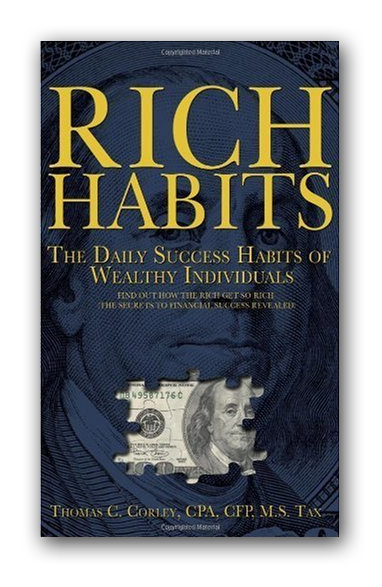
One of the interesting discoveries I made in my Rich Habits study was that self-made millionaires created multiple streams of income. Three seemed to be the magic number.

But the questions I often get asked are:

How were they able to avoid spreading themselves too thin?

How were they able to focus their time to each of their businesses?

The answer is – by Compartmentalizing.

Compartmentalizing is the act of single-mindedly focusing on one thing for a number of hours and then moving on to the next focal point.

Millionaires are so good at this, that it almost appears, to the untrained eye, to be an inherently unique trait possessed by the mighty few.

Only it isn’t.

It’s actually just a habit.

And, it’s a habit anyone can forge.

Once I understood how millionaires Compartmentalize, I forged this daily habit. Here’s how I did it.

I have three core businesses:

  • CPA Firm – 5 employees and about 1,000 clients
  • Financial Planning Company – I am part of a company with 130 financial planners.
  • Rich Habits Institute – I write books, I write articles for the media, I do speaking engagements, I do media interviews on my books and research and I occasionally offer Rich Habits training sessions to the public.

I typically manage my CPA business from 9am-5pm.

I typically manage my Financial Planning business from 5pm – 8pm.

I typically manage my Rich Habits business from 4:30am – 7am.

Occasionally, these businesses cross each other, but I do my best to focus on each core business by devoting specific, daily blocks of time to each.

This is something I learned from the entrepreneur-millionaires in my study. They Compartmentalized their businesses and by doing so, they were able to single-mindedly focus on each individual business at a time, ensuring its best chances for success.

Average is a Prison – Here’s What Average Looks Like in America

Tom Corley boats - crop

If you do what everyone else does you’ll get what everyone else gets, which isn’t much.

Here’s what average looks like in America: [Read more…]

If You Don’t Ask You Won’t Get

tip-o-the-morning

Tom Corley boats - crop

As a rule, most people do not like asking others for things.

Asking for what you want can make you feel like you are burdening someone or make you feel obligated to them.

But I learned from my Rich Habits research that self-made millionaires get comfortable being uncomfortable with a lot of things. Asking for what they want or need, is one of those things they became very comfortable doing.

They learned to get comfortable asking for help, advice or guidance in solving a problem.

They learned to get comfortable asking for others to mentor them.

They learned to get comfortable asking for money from family, friends or prospective investors.

They learned to get comfortable asking some prospect to buy their product or service.

When I became President of The Ashley Lauren Foundation, a non-profit organization that helps families struggling with pediatric cancer, it became apparent that I was going to have to get comfortable asking people for money.

As an adult, I’ve only ever had to ask banks, venture capitalists or private equity investors for money for the various business ventures I’ve been involved with over the years. That was easy for me to do because that was in my wheelhouse – something I was comfortable doing due to my finance background.

But asking individuals to fork over their hard earned money for a charitable cause was something new for me and outside my comfort zone. It took practice, but after seven years in working with the Ashley Lauren Foundation, I’ve gotten pretty good at asking for money.

The discomfort of asking for what you want diminishes every time you ask.

What I did find interesting and unexpected is that asking for help from others actually strengthened my relationship with them. We grew closer. The roots to our relationship tree grew deeper. This is because, asking for what you want forges a special kind of bond between two people; a unique bond that essentially says we have an investment in each other.

So, get comfortable asking for what you want. That’s what self-made millionaires do. The odds are pretty good – there’s a 50% chance you might get a yes.

A Closed Mind Invites Poverty

tip-o-the-morning

Tom Corley boats - crop

In 2004 Mark Zuckerberg invited 5 people to his Harvard dorm room to discuss a business opportunity. Only two people showed up.

Today, those two people are worth billions:

  • Dustin Moskovitz – $16.1 billion
  • Eduardo Saverin – $10.3 billion

Nothing is more costly than a closed mind.

Closed-mind thinking shuts the door to opportunity. What causes a closed mind?

  • IDEOLOGY – Unwavering beliefs that have locked in your thinking. Most of these beliefs are inherited from your upbringing. Sometimes, the are adopted from the thinking of influencers or significant others. Ideology, when it goes unchallenged, acts like a wall, blocking out any challenges to your thinking.
  • IGNORANCE – When you lack knowledge, you are unable to see opportunities when they present themselves.
  • OVERACTIVE EGO –  Having an overactive ego means you think you are always right. This closes your mind to new information, new ideas and new facts that could be critical to your success.
  • LOW SELF-ESTEEM – When you have low self-esteem, you undervalue your own thoughts, ideas and personal power. Low self-esteem is like a self-manufactured braking system that stops you in your tracks, preventing you from moving forward.
  • HATRED – Hatred is one of those costly negative emotions that consumes your thinking and your actions. When you hate someone, you ignore what they have to say. When you hate something, you dismiss it. In both cases, you lose. You lose because hatred has closed your mind.

The self-made millionaires in my study developed the daily habit of keeping an open mind. Those with an open mind are thirsty for new information, new ideas and new facts. As a result, they are constantly growing in knowledge and wisdom. This new knowledge and wisdom opens their eyes to opportunities to make more money.

Those with a closed mind struggle with poverty because opportunities to make more money are invisible to them and pass them by.

Ruts Don’t Come With Ladders – You Have to Build Your Own Ladder

tip-o-the-morning

Tom Corley boats - crop

Are you overweight?

Do you struggle to pay your bills?

Are you in a dead-end job?

Do you feel like you are stuck in a rut, hopelessly unhappy?

If you’re like most, the answer is yes to one or more of these questions.

So, what do you do?

Ruts don’t come with ladders. You have to build your own ladder and climb out yourself.

How? How do you climb out of your rut?

The answer is – The 100 Day Challenge.

What’s the 100 Day Challenge?


Engaging in one new positive activity for 100 days in a row.

Engaging in one activity for 100 day does four things:

  1. It will help to change the structure of your brain.
  2. It gets the attention of the basal ganglia. The basal ganglia is a small mass of neurons, deep inside the limbic system of the brain. One of its numerous responsibilities includes designating repetitive behaviors as habits. Once the basal ganglia marks a behavior as a habit, it remains a habit for the rest of your life.
  3. It will stimulate and motivate you.
  4. It will shift your mindset from negative to positive.

Below are some ideas for your personal 100 Day Challenge. Choose just one activity and limit it to 20 minutes a day:

  • Engage in some form of cardio activity for 100 days. This could be running, jogging, biking, cycling, walking fast, etc.
  • Read a non-fiction, educational book every day for 100 days.
  • Eat five hundred fewer calories a day for 100 days.
  • Limit your consumption of junk food to no more than 300 calories a day for 100 days.
  • Meditate for 100 days.
  • Listen to an educational podcast every day for 100 days.
  • Listen to one TEDx speech a day for 100 days.
  • Say I love you to your spouse, significant other, kids, parents, etc. every day for 100 days.
  • Spend $2 less every day for 100 days.
  • Do not gamble for 100 days.
  • Don’t drink beer, wine or alcohol for 100 days. If that seems impossible, limit your consumption of alcohol to no more than 1 drink a day for 100 straight days.
  • Floss every day for 100 days.
  • Don’t smoke cigarettes for 100 days. If that seems impossible, limit your cigarette smoking to one or two cigarettes a day for 100 days.
  • Pursue some new skill for 100 days.
  • Focus on becoming knowledgeable in one topic or subject area for 100 days
  • Don’t eat candy for 100 days.
  • Don’t consume sugar for 100 days.
  • Limit recreational social media use to no more than one hour a day for 100 days.
  • Offer gratitude for something good in your life. Do this once a day for 100 days.
  • Read something positive and uplifting every day for 100 days.
  • Call one different person a day, just to say hello, for 100 days.
  • Limit your consumption of TV to no more than one hour a day for 100 days.
  • Don’t gossip for 100 days.
  • Don’t curse for 100 days.
  • Don’t complain for 100 days.
  • Don’t criticize anyone for 100 days.
  • Don’t lie for 100 days.
  • Don’t procrastinate on anything for 100 days.

If you choose more than one activity you will tax your brain, making habit change impossible.

I discovered in my Rich Habits research that if you engage in a new activity for more than twenty minutes at a time, the willpower required expends too much brain fuel (glucose or ketones). The brain reacts to this excess fuel consumption by going to war with you and your new potential habit. If you keep the activity to within 20 minutes, the brain will not put up a fight.

So, focus on one activity for no more than 20 minutes a day.

It won’t be easy but if you stick to one activity and limit it to 20 minutes a day you will succeed.

When you complete your 100 Day Challenge, move on to another new positive activity and engage in it for the next 100 days. Over the course of one year you will have added three new, good habits to your life.

The 100 Day Challenge is your ladder out of your rut. Each 100 days represents a rung on that ladder. Slowly, after each 100 days, you will find yourself climbing higher and higher on your ladder and out of your rut.

Lack Passion? No Worries – You Don’t Need Passion to Become Rich and Successful

tip-o-the-morning

Tom Corley boats - crop

If you had to rely on passion, motivation or willpower to do what is needed to become successful, everyone would fail.
This is because passion and motivation ebb and flow from day to day. And willpower only has a limited reserve that peters out after a few hours.
Success requires consistency. So, you need something special; something more concrete and longer lasting than passion, motivation or willpower. Something that forces you to do what you need to do day in and day out, in order to keep you moving forward towards the realization of your dreams and goals.
What is that something special?
Good daily habits.
Habits by their very nature are automatic unconscious behaviors, thinking, decision-making and even emotions. To engage in habits you don’t need passion. You don’t need motivation. You don’t need willpower. All you need is to have forged the habits and then to be alive and awake.
Where passion, motivation and willpower do come into play is in the early stages of forging the habits.
Self-made millionaires use Passion, Motivation and Willpower to help them develop the good habits that will carry them through to the realization of their dreams and goals.
Once forged, habits stick forever. You will engage in them even when you lack passion, lack motivation and have zero willpower.
For this very reason, good habits put you on autopilot for success. They are critical to success and and infinitely more important than passion, motivation or willpower.

For Entrepreneurs, Becoming Rich is a Trial & Error Process

tip-o-the-morning

Tom Corley boats - crop

We all know that the pursuit of dreams and goals is one of the paths to riches. In my Rich Habits study, there were essentially three groups of self-made millionaires:

  1. SAVERS – Individuals who saved and invested their way to wealth.
  2. PUBLIC COMPANY EXECUTIVES – Individuals who worked for publicly-held companies and became senior executives.
  3. ENTREPRENEURS – Individuals who pursued a dream.

Those entrepreneurs who pursued a dream accumulated, by far, the most wealth ($7.4 million vs. $3.4 million and $3.6 million) and in the shortest period of time (12 years vs. 32 years and 25 years).

Why were entrepreneurs able to accumulate more wealth in a shorter period of time?

The answer is – Entrepreneurs had no choice but to forge good habits or fail.

You see, dreams, goals and habits are interconnected.

When you pursue a dream and the goals behind every dream, you must figure out what works and what does not work. This is a trial and error process. You experiment, fail, figure out what you did wrong, make adjustments and experiment again.

Entrepreneurs continue to experiment until they get it right. Once they have the right formula, then they turn that correct way of doing something into a habit. They continue this process until they forge numerous success habits, which enable them to keep moving forward towards the realization of their dream.

Pursuing dreams and goals forces you to create good daily success habits. And, because they’re habits, they stick with you forever. This is why, if you were to take away the wealth of self-made millionaire-entrepreneurs, like a phoenix, they will rise from the ashes.

Steve Jobs, for example, went through nearly all of the $117 million he had after he was fired from Apple. In his biography, he acknowledged that in 1994 he was one year away from losing everything. He eventually rebounded and when he died he was reportedly worth $10.2 billion.

In 2002, Elon Musk received a windfall of $180 million, after taxes, when eBay acquired his Pay Pal stock. Musk took his $180 million and invested it into three ventures: SpaceX ($100 million), Tesla ($70 million) and Solar City ($10 million). At the end of 2008, Musk was out of money to help fund his fledgling companies. He was able to rebound and is now reportedly worth $20.7 billion.