How to Achieve Long-Term Failure in Just 66 Days

Failure is such an ugly word. It shouldn’t be. There are a lot of people who are doing it. Maybe they know something the rest of us don’t know. According to the U.S. Census there are approximately 49 million who live below the poverty line in America and another 53 million who are at or near poverty. That’s a lot of people. There must be something to failure. So many people can’t be wrong.

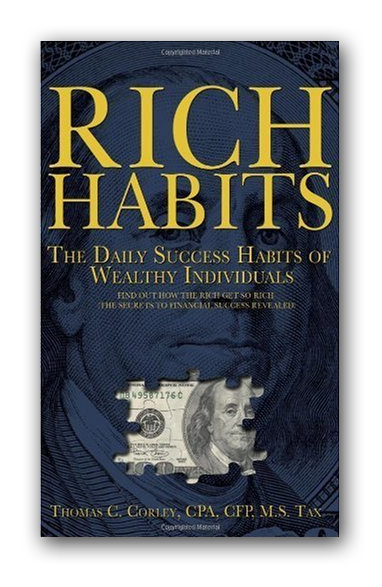
I spent five years researching the daily habits of the rich and poor and I’ve accumulated an enormous amount of data on exactly what you need to do to achieve either long-term success or long-term failure. I thought I’d share with you some of the habits that will help you succeed in failing. These habits, once adopted, will stop success in its tracks and get you on the path to long-term failure. Let’s not waste any time and get right to it. [Read more…]

Stop Climbing Someone Else’s Ladder

Most do what they do for a living because they were told to. A parent, or some other significant presence in their young lives, influenced them to pursue the job they have. Is it any wonder those “most people” hate what they do for a living and are unhappy? When you are climbing someone else’s ladder, you are not following your dreams in life, but someone else’s dream. Only when you pursue your dream, only when you climb your ladder, will you find happiness in what you do for a living. Life is very short. It’s gone in a blink. It’s time to start climbing your own ladder.


Habits Make You Smarter

Neuroplasticity is a fancy name for brain change. Every time you engage in a new habit you change your brain. Habits, therefore, can change the physical structure of your brain, making it better and more efficient. Every new habit improves your brain. The more habits you have, the more efficient your brain becomes. Habits are important because they reduce the consumption of glucose (brain fuel). The brain is an energy hog. It uses 20% of the entire body’s glucose reserves. If you are running low on glucose reserves, your brain slows down and your thinking is impaired. Habits prevent this from happening. When you add a habit, you actually reduce the brain’s need for glucose, which lowers the demand for glucose, making your brain work better and this improves your ability to think.


Turn Your Relationships Into Gold

Wealthy, successful people are very particular about who they associate with. Their goal is to develop relationships with other success-minded individuals. When they stumble onto someone who fits the bill, they then devote an enormous amount of their time and energy into building a strong relationship. They grow the relationship from a sapling into a redwood. Relationships are the currency of the wealthy and successful.

One of the strategies I uncovered in my five-year study of the daily habits of the rich and poor involves how the successful turn these relationship saplings into redwoods and I’m going to share it with you. Let’s go. [Read more…]

A Prescription For Happiness

“Real happiness requires meaning.”  Dr. Mark Rowe – Real Happiness in your life: http://youtu.be/mlaS1u7K6Ys

You don’t pursue happiness. Happiness is a byproduct of taking action, of pursuing your main purpose in life, a big goal or a life dream. Happiness is the journey, not the destination. In order to realize happiness you must begin your journey by taking action.


15 Ways to Increase Happiness

As many of you who follow me know, I’ve accumulated an enormous amount of research data on the habits that are responsible for creating a life of abundance (wealth) or scarcity (poverty). But there’s more to living a “rich” life than the accumulation of money. Money, as an end to itself, does not create a “rich” life. A “rich” life exists only when we find happiness. [Read more…]

“IF” is for Quitters

I am just back from the Titan Summit in Toronto. Four days surrounded by billionaires, deca-millionaires and fearless entrepreneurs. All of these success-heroes brought together in one room by the legendary Robin Sharma in an effort to make success a habit and elevate their game. Each with a story to tell; fraught with mistakes, failures, obstacles and setbacks. But in no single story will you find the narrative of a quitter. No, these individuals all possess an outlook that can only be described as positive certainty; moving forward, inch by inch, day by day, towards success. All great men and women who are true heroes because they pursue big goals, life dreams or their main purpose with a passion and enthusiasm that burns away the doubts, fears and uncertainty like an acid.

The Titan Summit of 2014 is over. While the rest of humanity suffocates itself in negativity, turmoil and human politics, these like-minded individuals will continue their mission: to pursue success and improve the lives of millions. They are the world’s great achievers. They persist, where most fail because “IF” does not exist in their vocabulary. “IF” is only for quitters. And none of them are quitters.

Go With The Flow

When successful people describe flow, it almost sounds like they are describing an experience typically associated with drugs or a sexual encounter. In a state of flow, we are in a state of unforced focus; the most powerful type of focus. This is a state in which humans are able to accomplish tasks efficiently and effectively. Creativity explodes during the state of flow. Inventions, breakthroughs, insight, seeing opportunities we didn’t see before, all occur during flow. In order to understand flow, however, we need to understand brain cycles, because flow happens during two of those cycles: beta and alpha.

Our brain has 4 brain cycles:

  1. Beta – We are in beta when we are driving, talking, working, reading, exercising etc. It represents the brain’s highest state of alertness. In beta, our brain cycle is the highest, 20 cycles per second or more.
  2. Alpha – This is the period of time just prior to sleep. We’ve left beta and we’re about to fall asleep. When we meditate, we are generally in alpha. In alpha, our brain cycle is between 7-14 cycles per second.
  3. Theta – We’ve left Alpha and are now sleeping or in deep meditation. In theta, our brain cycle is between 4-7 cycles per second. This is also when REM (Rapid Eye Movement) occurs during sleep.
  4. Delta – We are in deep sleep. When we are in delta our brain is at it’s slowest.

When we are in flow, our brain is cycling somewhere between beta and alpha. It is where we want to be because when we are in flow, we are taping into our genius. How do you get into flow? 5 to 10 minutes of light meditation, followed immediately by action, will put you in a state of flow. How long it lasts depends on how motivated or passionate you are about the activity. If the activity is something you love and are passionate about, flow could last for hours. If it is a boring task, flow could last for minutes. Ideally, you want to put yourself into flow when you are pursuing a big goal, dream or engaged in your main purpose. Big goals or following your dream or purpose in life keeps you in a state of flow. Passion, keeps you in a state of flow. Great achievements are the byproduct of being in a state of flow. E=MC squared, the lightbulb, the automobile, T.V., the iPod, Google, Facebook, the paper clip, post-it pads and many other inventions were born in a state of flow. So go out there and get your flow on. It’s where genius happens.


Become a Dream-Setter

“The world’s most exceptional athletes and high achievers are not goal-setters, they are dream-setters.” Dr. Greg Wells, author of Superbodies – Peak Performance Secrets From the World’s Best Athletes

A goal is only a goal if it is 100% achievable and requires physical activity. A goal’s purpose is to move you forward, every day towards the realization of your dream.


Push Yourself

“When you push yourself to the edge, your edge expands.”  Robin Sharma

Successful people push themselves to the edge. They step outside their comfort zones. They challenge themselves. Only by pushing yourself to the edge will you grow. Pushing yourself to the edge means taking risk. You will make mistakes. You may fail. It is an uncomfortable place to be. But only by pushing yourself to the edge will you learn new things. Growth occurs, not by staying within your comfort zone, but by moving outside that zone into the “uncomfort’ zone. The “uncomfort” zone is where all the successful people hang out.