10 Thinking Habits of Self-Made Millionaires

“Five percent of the people think; ten percent of the people think they think; and the other eighty-five percent would rather die than think.”
— Thomas Edison

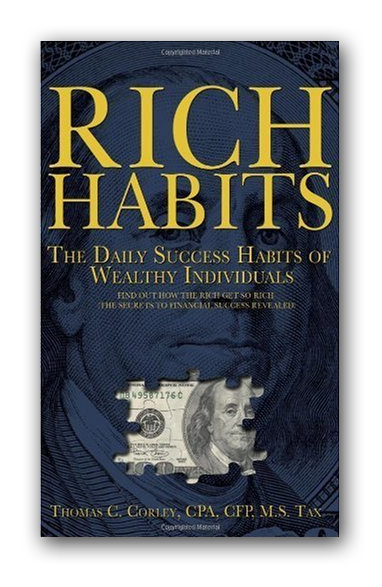
One of the things that stood out from my Rich Habits Study was how important thinking was to self-made millionaires. I tracked ten different types of thinking habits these millionaires engaged in frequently, if not daily. From my research, it was so evident that thinking was fundamental to their success that I decided it needed to become one of the ten Keystone Rich Habits.

When self-millionaires think, they do so in isolation, closed off from the world. Most engaged in their daily thinking habits in the morning, some during their commute in their car, others in the shower, and still others at night. Morning seemed to be the most dominant time frame, however. Typically, immediately upon waking, these self-made millionaires would find a quite space and think. How long? It ranged from fifteen minutes to thirty minutes. What did they think about? Well, they thought about a lot of things and when they thought, they thought in a way that most would refer to as brainstorming. They spent time every day brainstorming with themselves about numerous things. I was able to boil down those brainstorming sessions into ten core Rich Thinking Habit categories. Here they are: [Read more…]

What Sets Habits in Motion?

tip-o-the-morning

Every habit begins with a trigger. The basal ganglia, our subconscious brain, is always looking for triggers in order to notify the pre-frontal cortex, our conscious brain, to stop what’s it’s doing and engage in a habit. Unless you’re aware of your habits and consciously override the command from the basal ganglia, you will unconsciously engage in the habit. Part of the job of the basal ganglia is to create habits in an effort to allow the brain to work less and, thus, consume less fuel. The basal ganglia is the brain’s fuel efficiency manager, using habits as its main energy savings device. There are 4 primary habit triggers you need to be aware of:

  1. Visual Triggers – Visual Triggers are like unavoidable neon-glowing highway billboard signs that remind you to engage in a habit. The McDonalds arches are an example of a powerful Visual Trigger. Once your eyes catch the visual trigger, the basal ganglia immediately sends a signal to the pre-frontal cortex. The next thing you know, you’re eating a hamburger with fries.
  2. Time of Day Triggers – We all have habits that we engage in during the morning, afternoon and evening. Waking up in the morning is a trigger that sets in motion all sorts of habits: drinking coffee, exercise, brushing your teeth, taking a shower, reading, meditating, going to the bathroom etc. Afternoon Triggers set off your afternoon habits: eating lunch, gossiping, reading, surfing the Internet, making personal phone calls, networking, meetings with other people etc. Nighttime is a trigger that prompts you to engage in nighttime habits: eating dinner, a glass of wine, watching T.V., reading, making personal phone calls, exercise, engaging in a hobby or extracurricular activity, gardening, going to a bar etc.
  3. Stress Triggers – Stress can force you back into old habits. Stress overwhelms the brain, consuming far too much fuel. To compensate, the basal ganglia changes it’s game plan, using stress as a trigger to get you to engage in an old habit in order to conserve fuel.
  4. Association Triggers – People who you associate with are habit triggers. One friend can be a trigger for hitting the bars, another for exercising, another for gambling, another for reading and another for cheating on your spouse. Who you associate with can be a habit trigger, setting in motion all sorts of good or bad habits.

The key to breaking any bad habits is awareness of the habit and awareness of the triggers that set them off. Being aware of the triggers to your habits is critical to understanding what is setting off your bad habits. Once you have identified the bad habits you’d like to change, the next step in the habit change process is to identify the triggers to those habits. Only by identifying the external triggers that set a habit in motion, will you be able to break bad habits.

Where Did Your Habits Come From?

tip-o-the-morning

Where did you pick up most of your habits? I’ll bet you never gave it much thought. Your habits did not just manifest out of thin wire. They came from some source. That source, good or bad, inspired you to adopt certain habits. The habits we adopt in life primarily come through associations we make in life. Parents are the primary source for most of your habits but there are many sources:

  • Our Parents
  • Our Grandparents
  • Our Siblings
  • Our Spouse or Significant Other
  • Our In-Laws (Spouse or Significant Other’s Family)
  • Our Friends
  • Our Teachers
  • Our Schoolmates
  • Our Teammates
  • Career or Life Mentors
  • Public Figures – Celebrities, Professional Athletes, Famous People
  • Fellow Workers
  • Our Culture
  • From Formal Education
  • From Self-Education – Books (Self-Education Reading)
  • From The School of Hard Knocks – Our Mistakes and Failures

The Self-Made Millionaire Goal-Setting Process

From my five-year study of the daily habits of self-made millionaire, I learned that these millionaires know something about goal-setting that almost no one else knows. They understand that a goal is only a goal when you can control the outcome. If you can’t control the outcome, it’s a wish or a dream. There are two parts to the definition of a goal: [Read more…]

The Pursuit of Failure

tip-o-the-morning

Darren Hardy, in his early days as a salesman, would not stop working for the day until he was rejected fifty times. Tim Ferriss, author of The 4-Hour Workweek, was rejected 26 times before he found a publisher. Colonel Sanders failed over 1,000 times in finding a partner for his Kentucky Fried Chicken recipe. Everyone knows the story of Thomas Edison’s 10,000 failures. To date, I’ve accumulated 35,000 failures in trying to publish and promote my books.

There’s a great irony in the pursuit of success, in that you have to climb a mountain of failures to get there. It’s not some, or a few of the self-made millionaires who experience failure. It’s the rule, rather than the exception. This isn’t meant to discourage you. It’s intended to prepare you for you your journey. There’s a reason so few succeed in achieving their dreams. Not many have the stomach for failure. Not many have the grit that it takes to overcome their failures in order to realize success. In a very strange sense, pursuing success is really the pursuit of failure. You have to walk through hell (failure) in order to get to heaven (success).

Who is Your Main Competitor?

tip-o-the-morning

If you ask any business owner or business executive, they should be able to rattle off a list their main competitors. In small companies, most of your competition is local, maybe even regional. In large companies, you’re competing with other industry leaders, trying to coax market share away from a handful of other large companies.

In reality, however, there is only one person you should be competing with. Yourself. Or should I say, your “Yesterday-Self”. When you are competing with yourself, rather than some business competitor, then you know you are on track for unlimited success. The only person you need to best is who you were yesterday. When you shift your focus from external competition (a business competitor) to internal competition (yourself), you and your business will grow exponentially, leaving your external competition in the dust. The only person you need to be competing with is who you were yesterday.

Celebrate Your Victories

tip-o-the-morning

For the past five years I’ve failed frequently and consistently (What it’s Like to Fail 35,000 Times in Pursuit of a Dream http://richhabits.net/copy-what-its-like-to-fail-35000-times/). I’ve gotten over the embarrassment of failure. When you are pursuing a dream, I’ve learned that you have to get used to failing. You have to develop an immunity to its negative emotional affects or you will quickly lose your mind. On the rare occasion I succeed, well, it nearly knocks me off my chair. Its so completely unexpected.

What I’ve learned from all of my failures is how important it is to soak yourself in those rare successes. They are like an oasis in the Sahara. They renew you. I’ve learned to stop and let those rare success events pour over me like sweet honey.

I think there’s something important in failing. Failures not only teach you important lessons in what not to do; failures also teach you the importance of cherishing those rare successes. I’ve learned, over these past five years, the importance of celebrating my victories. They may not be often but when then happen, boy, they’re like life’s white out. They erase the pain of those failures, as if they were never there in the first place. When you succeed, for a moment in time you feel good about yourself. I think we all need to celebrate our rare victories when we have them. Life is just too short.

Habits Conserve Energy

tip-o-the-morning

Whenever you have to think about anything, you use precious brain fuel (glucose and oxygen). The brain cannot store fuel, so when you think, make decisions or rely on willpower, you drain your brain.

Think of habits as cars that get 150 miles per gallon. Habits take you very far on very little fuel. Thinking, decision making and relying on willpower are all gas guzzlers. They are like tanks, getting 5 miles per gallon. You can’t get very far driving a tank. Eventually, you’ll run out of fuel and stall.

Self-made millionaires understand this powerful truth. They use good habits to get them far in life without much exertion and this helps them conserve their brain fuel and energy. Because they have good habits, they have more available brain fuel to help them think creatively and make important decisions. The fuel is there when they need it thanks to the habits they formed earlier in their lives.

The Power of Asking

tip-o-the-morning

If you want to excel and succeed financially in life you have to get into the habit of asking. Ask for help, ask for favors, ask for support for your initiatives. If you don’t ask you won’t get. Self-made millionaires figured this out during their journey. Successful people make it a habit of asking for whatever it is they need at the moment.

Fear holds most back from asking. Fear of rejection, fear of being indebted to someone because they gave you some help, fear associated with deepening a relationship. There are all types of fears that rear their ugly heads and stop you from asking. But self-made millionaires overcome those fears and get into the habit of asking. They get accustomed to the rejection and, after some time, rejection does not sting as much because some do say yes. And those yes’s help move them forward towards achieving their goals and realizing their dreams.

Asking is a Rich Habit. Start small. Ask for little things at first. Build up an immunity to rejection. After some time you will lose your timidity and you will start asking for bigger things. You will get many no’s but all you need is a few yes’s. The benefits you derive from those one of two yes’s make all of the no’s worth it.

4 Spending Habits to Avoid

tip-o-the-morning

I found a common thread in the spending habits of self-made millionaires that is one of the many pieces to the success puzzle – discipline. They are disciplined about how they spend their money. Here are the top four spending habits I discovered:

  1. They do not use credit cards for ordinary living expenses
  2. They do not make spontaneous purchases
  3. They spend no more than 25% of their after-tax (net) income on housing
  4. They do not gamble, or gamble infrequently