Archives for July 2019

The Rich Habits of Sir Richard Branson

tip-o-the-morning

Tom Corley boats - crop

Richard Branson was not a good student. He struggled with ADD and dropped out of Stowe School, a very prestigious, private boarding school in England, in order to pursue his dream of publishing his own magazine, which eventually grew into a mail-order record business, known as Virgin Records.

Today, Virgin Group encompasses 400 businesses around the world, employing 50,000 people.

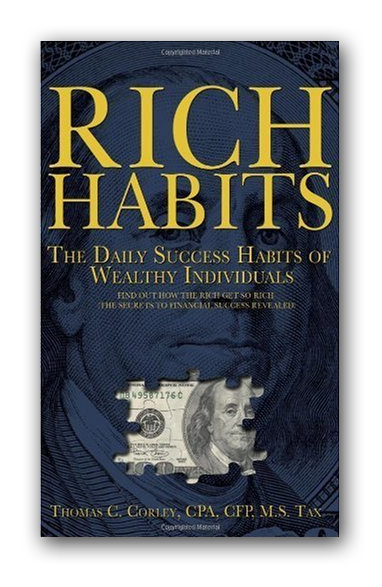
As an extension of my Rich Habits research, I devote hours every day studying the lives of rich people and poor people. I’ve amassed quite a bit of research data on numerous individuals. Richard Branson is one of those individuals. I thought I’d share with you some of Richard Branson’s Rich Habits:

Choose a Path Towards Creating Wealth

There are 4 path’s to creating wealth:

  1. Saver-Investor
  2. Senior Executive of Major Business
  3. Virtuoso
  4. Dreamer-Entrepreneur

Branson chose the Dreamer-Entrepreneur path.

Dream-set

Branson had a vision of the life he desired to have. He has devoted his life to that vision.

Control Your Emotions

Branson believed it was critical, especially in negotiations and dealing with employees, to always remain calm and collected.

Exceed The Expectations of Others

Most of Branson’s businesses are service-based. His goal was to always try to exceed the expectations of others. For example, when Virgin Airlines first started, all first class customers were picked up by a limousine and driven to the airport.

Control the Words That Come Out of Your Mouth

Branson was never openly critical to his employees. Instead, he advocated for offering only praise to employees He believed encouragement was the secret to getting the most out of employees.

Always Seek Feedback

Branson sought feedback from employees and customers. He believed constant feedback was critical to success.

Learn to Pivot

In his book Like a Virgin, Branson stated that only a fool never changes his mind.

Take Calculated Risks

Branson took significant risk in starting and growing the Virgin brand. But, he only took Calculated Risks. Calculated Risk is the primary type of risk the self-made millionaires in my Rich Habits Study took. It requires doing your homework and planning for every good or bad outcome. When it came to taking risks, Branson always had an escape hatch, or Plan B. For example, when he started Virgin Airlines, Branson knew very little about the airline industry. So, his Plan B required the airline who sold him his first airplane to buy it back, in the event Virgin Airlines failed.

Be Persistant

Branson refused to surrender to adversity. He believed one of his greatest traits was his ability to bounce back after a setback. He stated in his book, Like a Virgin, that bouncing back from adversity is the #1 trait of successful entrepreneurs.

Take Action on Big Goals

Branson believed it was critical to think big and build small. Almost all of his businesses were start-ups. They began small and grew organically. But his vision was always the guiding light, the path, that helped those businesses grow into large companies.

Be Fearless

Branson believed you must be fearless when venturing into new areas. In order to alleviate that fear, Branson and his team took Calculated Risks and always had a Plan B.

Follow Your Passions

Branson believed that doing what you loved was the thing that enabled you to develop your skills and expose your innate talents.

Engage in Daily Exercise 

For the past 50 years, Branson has devoted himself to daily exercise. In fact, he often describes himself as an exercise junkie.

My mission is to share my unique research in order to help others realize their dreams and achieve their goals. If you find value in these articles, please share them with your inner circle and encourage them to Subscribe. Thank You!


We Have Habits Because the Brain is Lazy

tip-o-the-morning

Tom Corley boats - crop

I know it sounds crazy to say this but we are hardwired to be lazy. And we have our brains to blame.

The fact is, the human brain is lazy.

Or, looking at it another way, the brain finds ways of doing things that make it work less. That’s why we have habits.

Habits enable the brain to work less. There is no conscious thinking involved. Habits put us on autopilot.

This is a good thing if you have far more good habits than bad habits and a very bad thing if you have far more bad habits than good habits.

The vast majority of the human population has far more bad habits than good habits. This is why we have so many struggling with poverty, an obesity epidemic, increased incidence of type II diabetes, infidelity, harmful addictions (drugs, alcohol and gambling for example), racial discrimination and all sorts of other social ills.

When too many individuals have too many bad habits, it affects all of society. So, good habits improve everyone’s life, not just your own.

The commander in chief of lazy, inside our brain, is called the basal ganglia.

The basal ganglia is tasked by the brain with creating and triggering habits.

The brain wants more habits – the more the merrier.

Why?

The brain is an energy hog. It uses 20% of all of the entire body’s glucose and oxygen. Without habits, the brain’s fuel needs would be inadequate. Brain activity would be forced to slow down. When brain activity slows, it sends a message to the rest of the body to go to sleep or rest.

Without habits we would need to take numerous naps during our busy work days.

Habits make it possible for us to function for long stretches of time, without the need for rest. So, habits are wonderful things.

The brain likes habits so much that 40% or more of all of our behaviors, thinking, emotions and decision-making are habitual.

My mission is to share my unique research in order to help others realize their dreams and achieve their goals. If you find value in these articles, please share them with your inner circle and encourage them to Subscribe. Thank You!

The Pursuit of a Dream Forces You to Become Your Very Best

tip-o-the-morning

Tom Corley boats - cropMy father, who at one time was worth millions of dollars, once told me:

“When I was rich and successful, everyone thought I was a genius.”

Success makes people think you are smart.

The interesting thing is, they’re right. Those who succeed become very knowledgable by virtue of the continuous growth that accompanies the pursuit of a dream.

But it’s not the realization of the dream, the success and the wealth that follows, that makes you a genius – it’s the pursuit.

You grow into the person you need to become in order to realize success.

Wealth is merely a derivative of success. Success is a byproduct of growth. Growth results from pursing a dream.

That pursuit forces dreamers to experiment with new and different ideas, accumulate new and different information, create new and different processes and seek out new and different opinions.

Anything new and different leads to growth. Growth leads to success and success leads to wealth.

The pursuit of a dream changes you forever. It unleashes the greatness deep inside of you, making you better.

Growth, you see, is the ultimate reward of success. Not wealth.

Wealth can come and go, if you are not diligent in preserving it or possess poor money habits.

But the learning that results from the pursuit of a dream, sticks forever. And it is that learning, or growth, that enables the recreation of wealth, over and over again.

My mission is to share my unique research in order to help others realize their dreams and achieve their goals. If you find value in these articles, please share them with your inner circle and encourage them to Subscribe. Thank You!

The Obsessed Entrepreneur

tip-o-the-morning

Tom Corley boats - cropIn my Rich Habits Study I identified four paths to accumulating wealth:

  1. Saver-Investor Path
  2. Senior Executive Path
  3. Virtuoso Path and
  4. Dreamer-Entrepreneur Path

Those who pursue the Dreamer-Entrepreneur Path begin the journey after discovering some passion – something that makes their heart sing.

Taking action on their passion lead to a fanatical obsession. Obsession endowed these Dreamers with a relentless persistence.

In fact, it took the average Dreamer-Entrepreneur in my study twelve years to realize their dream. That’s a long time to persist at anything.

Passion, followed by action, created obsession which made them appear to be relentlessly persistent.

But it all started with finding some passion and then taking action on that passion.

64% of the rich and successful in my study were obsessed with pursuing one, singular goal. Some spent years, others longer, in pursuing and achieving one major goal.

Realizing your dreams in life requires an obsessiveness that boarders on fanaticism. It must occupy your thoughts when you wake, during the day, at night and even in your dreams.

Persistence results in two things:

  • Some Major Breakthrough – Figuring things out. Some call this an Ah Ha moment.
  • Luck – The persistent eventually get lucky. Luck results in success and its byproduct – wealth.

My mission is to share my unique research in order to help others realize their dreams and achieve their goals. If you find value in these articles, please share them with your inner circle and encourage them to Subscribe. Thank You!